
INTRODUCTION
Have you experienced consecutive tooth loss? Thanks to modern dental treatments, there are now several ways to restore missing teeth. If you’re exploring your options, searching for a dentist office near me can help you find professional guidance tailored to your needs. Two of the most common options are implant-retained bridges and dentures. Both can improve how your mouth works and looks, but they work differently and offer different benefits.
Let’s take a closer look at both options to help you understand which might be the better choice for you.
WHAT IS AN IMPLANT-RETAINED BRIDGE?
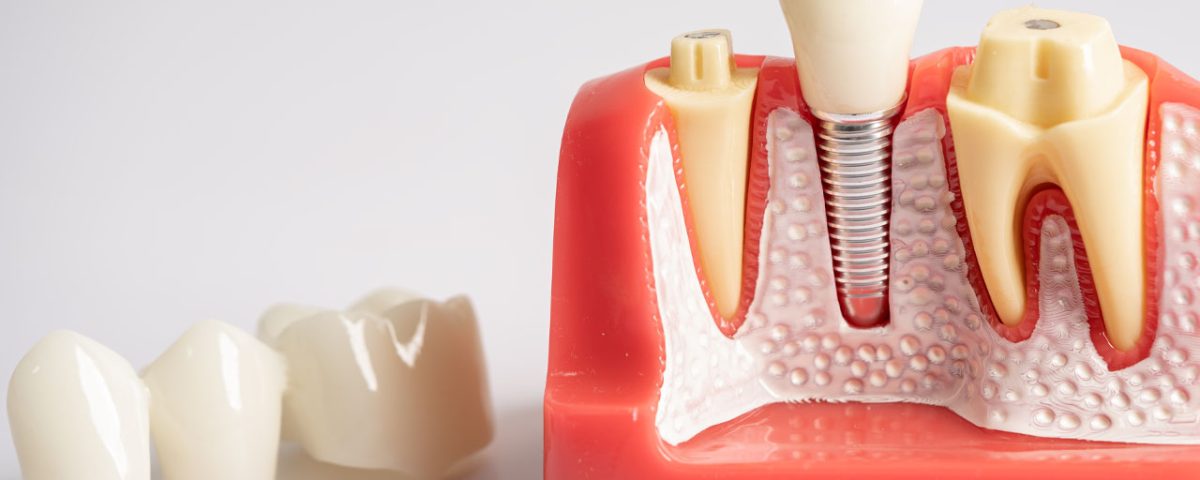
An implant-retained bridge is a dental solution used to replace several missing teeth in a row. It involves a row of artificial teeth (called a bridge) that is attached to two dental implants—one on each end. These tiny posts, which resemble the roots of natural teeth, are inserted into your jawbone. The bridge is fixed in place, so it doesn’t move and can only be removed by a dentist.
WHAT IS A DENTURE?
A denture is a removable dental device used to replace one or more missing teeth. It rests on the gums and is usually supported by the soft tissues and remaining teeth in the mouth. Dentures can be partial (replacing a few teeth) or full (replacing all teeth in the upper or lower jaw).
WHY CHOOSE AN IMPLANT-RETAINED BRIDGE OVER DENTURES?
Here are four main reasons why implant-retained bridges are often a better solution:
4.1 BETTER FUNCTIONALITY
Implant-retained bridges function almost like real teeth. You can confidently eat, talk, and smile because they remain securely in place. You don’t have to be concerned about your dentures slipping or falling out as you chew or speak.
1.2 IMPROVED ORAL HEALTH
Because it is no longer stimulated by tooth roots, the jawbone begins to shrink when teeth are lost. Implant posts act like natural roots and provide the stimulation needed to keep your jawbone strong and healthy. This lowers the chance of developing dental issues in the future by protecting the bone and gum tissue.
1.3 PROTECTS SURROUNDING TEETH
Implant-retained bridges are independent, in contrast to conventional bridges that could be supported by neighboring teeth. They do not require grinding down or putting pressure on neighboring healthy teeth. This keeps your natural teeth intact and healthier for longer.
1.4 MORE NATURAL APPEARANCE
Implant-retained bridges are made from high-quality materials that look just like natural teeth. They reflect light like real enamel and help keep your face shape intact by preventing bone loss in the jaw. Dentures, over time, can lead to changes in facial appearance due to bone shrinkage.
CONCLUSION
A more durable and aesthetically pleasing solution for replacing lost teeth is an implant-retained bridge. While dentures typically need to be replaced every five to ten years, they can survive up to twenty years with the right maintenance.
If you’re looking for a durable and comfortable solution, talk to your dentist about whether implant-retained bridges are right for you.